مقابلة مع أنور البني
روث ريجلر روث ريجلر
…
في 12 أغسطس من هذا العام، أجرت الناشطة الألمانية في مجال حقوق الإنسان وعضوة فريق RFS، كاتارينا لوفريجليو، مقابلة مع المحامي السوري البارز والمتميز في مجال حقوق الإنسان، أنور البني.
أمضى البني عقوداً في الدفاع عن السجناء السياسيين وتوثيق التعذيب وغيره من الجرائم التي ارتكبها نظام الأسد. وقد اعتقله النظام عام 2006 بسبب نشاطه في مجال حقوق الإنسان والديمقراطية، وحُكم عليه بالسجن خمس سنوات قبل إطلاق سراحه عام 2011.
يقيم حاليًا في ألمانيا، ويرأس المركز السوري للدراسات والبحوث القانونية، وقد لعب دورًا رائدًا في ملاحقة ومحاكمة مجرمي نظام الأسد أمام المحاكم الأوروبية. ومن بين إنجازاته العديدة، ساهم عمله في إرساء محاكمة كوبلنز التاريخية، التي أسفرت عن أول إدانة في العالم لمسؤول رفيع المستوى في نظام الأسد بارتكاب جرائم ضد الإنسانية في سوريا.
كاتارينا لوفريجليو : ما الذي تغير بالنسبة لك شخصياً منذ سقوط الأسد في عام 2024؟ هل تخطط للعودة إلى سوريا؟
أنور البني: بالنسبة لي شخصياً، كنت أتوقع هذه اللحظة. لذلك، لم تفاجئني، لأنني كنت أعلم أنها قادمة.
تغيرت حياتنا – أصبح عملنا الآن يتركز بشكل أساسي في سوريا. في اليوم التالي مباشرة لسقوط الأسد، انتقل فريقنا إلى سوريا وبدأنا التخطيط لما سنفعله. انطلقت ورشتنا الأولى في 26 ديسمبر 2024.
أنا متحمس للغاية للعمل الآن في سوريا، الأمر الذي فتح أمامنا آفاقاً واسعة. أنا شخصياً ما زلت هنا في برلين، لكن ابنتي وابني انتقلا بالفعل إلى سوريا.
لا يزال الوضع الأمني في سوريا هشاً: أولاً، يُمكن لأي شخص أن يقتل أي شخص آخر في الشارع. أما أنا شخصياً، فلديّ الكثير من الأعداء: من داعش، ومن النظام السابق، ومن النظام الإيراني، ومن المتطرفين الإسلاميين، وغيرهم. ثانياً، لا أرغب في مصافحة أي شخص من السلطات حالياً؛ فقد يُحاكمون كمجرمين في المستقبل.
CL : كيف ترى الحكومة الانتقالية ومسار العدالة الانتقالية في سوريا اليوم؟
أ.ب: أنا متفائل عموماً. كانت العملية الانتقالية في معظم الدول التي مرت بهذه المرحلة مكلفة. الفترة الانتقالية مربكة وصعبة، خاصة في غياب أي مساعدة من المجتمع الدولي.
لكنني متفائل بأن الأمور ستسير على ما يرام، رغم الجرائم المرتكبة في المنطقة الساحلية والسويدة، حتى وإن وُجدت أخطاء جسيمة في الاقتصاد، وأحياناً فساد واسع النطاق. لكن بشكل عام، الوضع يتحسن باستمرار حسبما أرى.
كما تعلمون، فإن المتمردين الذين قدموا من إدلب كانوا حوالي 40 جماعة مختلفة، وقبل وصولهم إلى دمشق في 6 ديسمبر 2024، كانوا يتقاتلون فيما بينهم.
إن الخطر الأكبر يكمن في أن يبدأوا في قتال بعضهم البعض مرة أخرى، لأنه إذا فعلوا ذلك، فإن سوريا ستغرق في الفوضى وسيسيل الدم في الشوارع في كل مكان.
وحتى الآن، لا تزال هناك أخطاء كبيرة، بل إن بعض الأشخاص في السلطات الحاكمة هم مجرمون حرب سابقون، لذا فإن الفترة الانتقالية صعبة دائماً.
CL : هل تلقيت أي طلبات للعمل بالتنسيق مع الحكومة أو السلطات الجديدة، وخاصة التعاون في عملية العدالة الانتقالية؟
AB: لا – لكنني لن أقبل [مثل هذا الطلب] على أي حال!
اتصل بي السفير الألماني ليسألني عن خطتنا للمرحلة الانتقالية في سوريا. شاركته أفكاري، وقام بدوره بنقلها إلى السلطات السورية.
على أي حال، لقد نشرت كل هذا منذ زمن طويل.
لقد نقل أفكاري إلى السلطات في سوريا، لكنهم لم يكترثوا بها. بعضهم يخشاني لأنهم يعلمون جيداً أنهم ارتكبوا جرائم بأنفسهم. سأظل دائماً إلى جانب الضحايا.
CL: لقد حذرت من أن الحكم على الأسد وغيره من المسؤولين السابقين بالإعدام قد يمنع تسليمهم، واصفاً الحكم بأنه “عدالة شكلية” بدلاً من عدالة انتقالية.
ما الذي تتطلبه العدالة الانتقالية الحقيقية بدلاً من ذلك، وكيف يمكن لسوريا محاسبة هؤلاء الرجال دون مساعدة روسيا في تبرير رفضها تسليمهم؟
AB : إن عملية العدالة الانتقالية في سوريا حتى الآن هي كل شيء إلا العدالة الانتقالية.
أولاً وقبل كل شيء، إنه “عرض انتقالي”.
ثانياً: لقد سيطر وزير العدل، بدلاً من لجنة العدالة الانتقالية، على عملية المساءلة برمتها. وهذا ما يجعلها “عدالة انتقامية” بدلاً من عدالة انتقالية.
إضافةً إلى ذلك، فهم لا يتعاملون إلا مع حالات مختارة من العدالة الانتقالية، حيث ينتقون هذا الشخص أو ذاك [للمحاكمة] بينما يسمحون للبعض بالإفلات من العقاب. لذا، فهذا ليس عدالة انتقالية على الإطلاق.
لكن الأمر لا يقتصر على المحاكم التي تفشل في بذل جهد عادل لتحقيق العدالة الحقيقية.
بالإضافة إلى ذلك، لا يقتصر الأمر على الأسد نفسه فقط! فهناك آلاف المجرمين خارج سوريا في أوروبا وأماكن أخرى.
كما لا يجب أن نقتصر على تطبيق العقوبات المنصوص عليها في القانون السوري فقط، بل يجب علينا تطبيق القانون الدولي لتحقيق العدالة الحقيقية.
لا أدري إن كانت الأحكام الصادرة مؤخرًا ضد الأسد والمجرمين الآخرين خطوة حكيمة، أو إن كانت الحكومة السورية جادة في ذلك. يبدو أنهم يستعجلون الأمر لمجرد إظهار قدرتهم على القيام بذلك بأنفسهم، ولا يريدون السماح بأي تدخل خارجي في عملية العدالة الانتقالية. بل يريدون الاستيلاء على زمام الأمور كأداة، لا كعدالة انتقالية حقيقية للضحايا.
لذلك، فإنهم يبقون [العدالة] في يد وزير العدل كأداة، بدلاً من منحها للجميع كمبدأ لأنهم يريدون السيطرة الكاملة عليها، دون تدخل أي شخص آخر، بما في ذلك أنا.
في الواقع، لا يشملون المحامين بشكل عام – فهناك محامٍ واحد فقط مشارك في العملية!
لقد سيطر وزير العدل على عملية العدالة الانتقالية بأكملها، متجاهلاً نضال أولئك الذين يمثلون الأشخاص المفقودين، والذي يقع في يد اللجنة الوطنية للأشخاص المفقودين.
أما بخصوص روسيا، فلا أشعر بالقلق حيالها. لقد استولت روسيا على الأسد لإنقاذه، وأخذت أمواله أيضاً، وستبيعه حتماً عندما تجد عرضاً مناسباً. ستعيده إلى سوريا أو أي مكان آخر، عندما يسمح الوضع بذلك، وستحصل على ثمن باهظ مقابل بيعه.
لا أقلق: فقد أصدرت فرنسا وألمانيا أوامر اعتقال بحق الأسد. لذا، سواء تلقت روسيا فدية مقابل بيعه من فرنسا أو ألمانيا، سيبيعه بوتين بعد أن يستولي على كل أمواله؛ فهو يملك مليارات.
إن العدالة وطريقة تحقيقها لا توجد إلا بطريقة واحدة – لا يمكنك تحقيق العدالة الحقيقية بالطريقة الخاطئة.
قد يقتل الضحايا المجرمين في الشارع، لكن هذا ليس عدلاً. إذا قتلوا الأسد في الشارع، سيفرح الجميع، لكن هذا ليس صحيحاً، لأن العدالة تختلف.
استخدم نظام الأسد القضاء أداةً للسيطرة على المجتمع. نرفض العودة إلى هذا النهج، حيث يُحصر القضاء في يد السلطة وحدها. ما يحدث الآن ليس السبيل الأمثل لتحقيق العدالة، ونحن نريد تحقيقها بالطريقة الصحيحة!
CL: هل هناك أي تحركات جارية حاليًا لمعارضة تسجيل المجرمين السابقين في الدوائر الحكومية أو المنظمات الرسمية الأخرى، ولإنهاء فرصة إفلات الأثرياء من العقاب عن طريق دفع المال؟
أ.ب: حتى الآن، ندرب حوالي 200 محامٍ في سوريا. وقد عقدنا أكثر من 23 ورشة عمل في مختلف أنحاء سوريا. ويتواصل محامونا مع الضحايا، ويُعدّون الملفات، ويرفعون الدعاوى
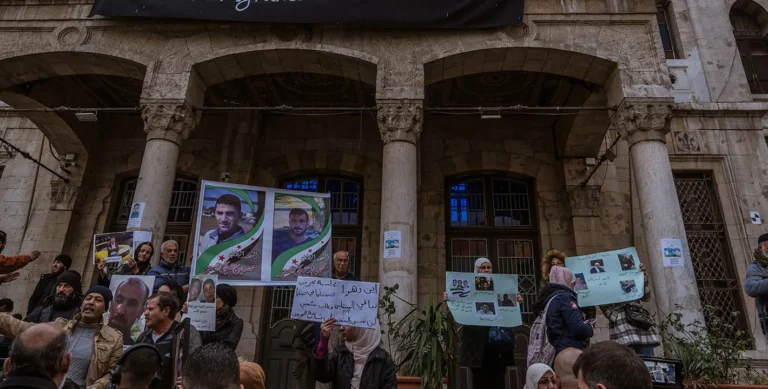
Anwar al-Bunni stands outside the courtroom for the trial of former regime officer Anwar Raslan in Koblenz in June 2022, surrounded by images of a few of the Assad regime’s victims.
On August 12 this year, German human rights activist and RFS team member Catharina Lovreglio interviewed the prominent and distinguished Syrian human-rights lawyer Anwar Al-Bunni.
Al-Bunni has spent decades defending political prisoners and documenting torture and other crimes committed by the Assad regime. Arrested by the regime in 2006 for his human-rights and democratic activism, he was sentenced to five years in prison before his release in 2011.
Now based in Germany, he heads the Syrian Center for Legal Studies and Research and has played a leading role in pursuing and prosecuting Assad-regime criminals through European courts. Amongst his numerous achievements, his work helped make possible the landmark Koblenz trial, which produced the world’s first conviction of a senior Assad-regime official for crimes against humanity in Syria.
Catharina Lovreglio: What’s changed for you personally since the fall of Assad in 2024? Are you planning a return to Syria?
Anwar al Bunni: For me personally, I saw this moment coming. So, it didn’t surprise me, because I knew it was coming.
Life for us changed – now our work is mainly located in Syria. On the very day after the fall of Assad our team changed to Syria and started to planning what to do. Our first workshop started the 26 of December 2024.
I’m really very excited to be working now in Syria, which opened up major options for us. Personally, I’m still here in Berlin, but my daughter and son already moved to Syria.
The security situation in Syria is still precarious: First, anybody can kill anyone else on the street. As for me personally, I have a lot of enemies: from ISIS, from the former regime, from Iranian regime, from Islamist radicals etc. And second, I don’t want to shake hands with somebody from the authorities yet; they could perhaps be prosecuted as criminals in future.
CL: How do you see the transitional government and the course of transitional justice in Syria today?
AB: I am generally optimistic. The transitional process in most countries which passed through this process, was costly. The transitional period is confusing and hard, especially without any help from the international community.
But I’m optimistic that it will go well, despite the crimes committed in the coastal region and Swuaida, even if there are major mistakes in economy, and sometimes also large-scale corruption. But in general it’s getting better and better as far as I can see.
You know, the rebels who came from Idlib, were about 40 different groups, and before they came to Damascus on December 6, 2024, they were fighting between themselves.
The biggest danger would be if they were to start fighting each other again, because if they did that, Syria would be thrown into turmoil with blood in the street everywhere.
Even now, there are big mistakes and even some of the people in the ruling authorities are former war criminals, so, the transitional period is difficult always.
CL: Did you receive any requests to work in coordination with the new government or authorities, especially cooperating in the process of transitional justice?
AB: No – but I wouldn’t accept [such a request] anyway!
The German ambassador called me to ask me what our plan would be for the Syrian transitional period. I shared my ideas with him, and he passed these on to the Syrian authorities.
Anyway, I published all this a long time ago.
He passed on [my ideas] to the authorities in Syria, but they didn’t take any notice. Some of them are afraid of me because they know very well, that they themselves committed crimes. I will always be on the victims’ side.
CL: You warned that sentencing Assad and other former officials to death could prevent their extradition, calling the verdict ‘performative justice,’ rather than transitional justice.
What would genuine transitional justice require instead, and how can Syria hold these men accountable without helping Russia to justify its refusal to surrender them?
AB: The transitional justice process in Syria up to now is everything but transitional justice.
First of all, it is a ‘transitional show’.
Secondly: the minister of justice, rather than the Commission for Transitional Justice, has taken control of the whole accountability process. That makes it ‘revenge justice’ instead of transitional justice.
In addition to that, they’re only dealing with selected cases of transitional justice, picking out this or that figure [for prosecution] while allowing some to get away with it. So, this is everything but transitional justice.
However, it’s not just the courts that are failing to make a fair effort to achieve true justice.
Additionally, this isn’t just about Assad himself! There are many thousands of criminals outside Syria in Europe and elsewhere.
Also, we mustn’t only apply the punishments under Syrian law. We need to apply international law for real justice.
I don’t know if the judgements issued against Assad and the other criminals recently are a smart move, if they [the Syrian government] really meant it. It seems like they’re hurrying just to show they can do it themselves and they don’t want to allow any external involvement in the transitional justice process. Instead, they want to take the process into their own hands as a tool, not as real transitional justice for the victims.
So, they keep it [justice] in the hand of the minister of justice as tool, rather than granting it to everyone as a matter of principle because they want to have full control over it, with nobody else involved, including me.
In fact, they don’t include lawyers in general – there’s only one lawyer involved in the process!
The minister of justice has taken control of the entire transitional justice process, ignoring the struggle of those representing the missing people, which is in the hand of the National Commission for t Missing People.
Regarding Russia, I don’t worry about Russia. Russia took Assad to save him, they took his money too – and they’ll sell him when there’s a good offer, for sure. They’ll deliver him back to Syria or elsewhere, when the situation allows this and they will get a good price for him.
I don’t worry: arrest warrants have been issued for Assad by France and Germany. So, whether Russia receives the payment for him from France or Germany, Putin will sell him after he’s taken all his money from him; he [Assad] has billions.
Justice and the way to achieve justice is in only one way – you can’t attain real justice in the wrong way.
Victims can kill criminals in the street, but this isn’t justice. If they kill Assad in the street, everybody will be happy, but this isn’t right, because justice is different.
The Assad regime used the court as a tool to control society. We refuse to return to this way by using judgement as tool in the authority’s hand only. What’s happening now isn’t the right way to achieve justice – we want to do it the right way!
CL: Are there any moves currently underway to oppose the enrolment of former criminals into governmental departments or other official organisations and to end the opportunity for rich people to escape punishment by paying money?”
AB: Up to the present, we’re training about 200 lawyers in Syria. We’ve held more than 23 workshops across the whole of Syria. Our lawyers are contacting the victims, preparing files and bring charges against the perpetrators, following the cases, and so on.
CL/RFS: How many ongoing or upcoming procedures are actually in progress in the EU? What’s the cooperation like with European organisations and offices? And how exactly does the procedure work to open a case for a claim through victims, their lawyers, governments, and organisations?
AB: “Our work focuses specifically on justice. We tried to get support from GEZ, for example, in Germany, but we failed. There is no organisation here in Germany to help us because our work is so specific.
There’s no help from the EU either.
I have many contacts but they can’t help us inside Syria. They help us here in Europe but not inside Syria.
I offered the [Syrian] government to provide training for the judges or the police, but they refuse to accept it. They don’t want anyone on ‘their’ property because they can’t use me or us as they want.
They tried saying, “Come to Syria, talk to Ahmad al-Sharaa,” etcetera, but I refused the offer because I can’t shake hands with anyone, who might in future find themselves facing criminal charges, who possibly committed crimes, and give him any credibility or the appearance of honesty.
It’s possible that Sharaa himself once committed crimes and maybe one day the victims will come forward to demand justice for themselves, and I’m always on the victims’ side.
I’ll give him [Al Sharaa] a chance, but that doesn’t mean, that, if any victims call for justice, I won’t stand beside them. So, for that reason, I don’t accord him any credibility, honesty or amnesty.
They [the government] don’t want anybody to affect them. They have a plan. And time plays a big role – you can’t just leap into justice.
I understand Ahmad Al-Sharaa’s work and he plays a major role now – if he didn’t, Syria would be in grave danger now.
CL: What lessons does the Syrian revolution offer us?
AB: Not all Syrians who opposed Assad, want Syria to be for all Syrians in peace and freedom. Maybe only 10% want this. The rest may be wanting something like Assad, the [authoritarian] ideology.
The Syrian revolution was the first step. Now we have a big fight with those people who don’t want Syria to be for all Syrians.
But we fight it in a peaceful way, always increasing the people’s awareness of their rights, protesting and demonstrating and asking. There’s now a high level of freedom in Syria. The people in the country are speaking about everything. There are now over 1500 newly formed organisations in Syria. We’ve helped 60 organisations to set themselves up, to register and to build [organizational] structures.
The space for civil society is sizable and there’s a high level of freedom now, with people speaking out everywhere, so it’s going well.
The primary result of the Syrian revolution is: the people will not let the nation go back. Fifty years under Assad were too many, now Syria needs time to rest.
CL: Which external power poses the greatest threat to Syria? And which internal forces do you see as posing a danger to the stability, safety and peace in the country?
AB: Syria isn’t currently in danger from internal groups, but it is in danger from external powers: from Turkey, from the UAE, from Russia, from Iran, from Hezbollah and, number one, from Israel.
The danger is far greater from outside than inside. It’s not as if this makes the authorities unstable – they’re doing well until now.
But that doesn’t mean, things in the future will continue like they’re going right now.
And the EU is watching until now.
Civil society in Syria is very powerful, and I think part of the authorities, including Al-Sharaa and Al- Shebani, want to build a real civilian state. But there are still groups like ISIS and others.
I don’t think that the Druze or the Kurds are against Syria – though there are Al-Hijiri and the PKK of course.
The cost of transitional justice doesn’t end with the regime. In Iraq there were 500.000 victims, in Rwanda millions, etc.
So, the transitional period is very dangerous. In Syria, if you look at the whole picture, we are, until now, doing well.
CL: What currently is giving you hope regarding Syria?
AB: If the authorities make mistakes, this will increase costs and take longer. Up to the present, there are mistakes, but I remain optimistic so far.
With the Kurds, things are going well, I think, as with all the people in Syria.
In previous times [under the deposed regime], the people had no loyalty to the country as there was no state security, so people focused on their religious and ethnic identity. Even now, there’s no protection for anybody. So, it’s taking time!
CL: How you manage to continue believing in humanity?
AB: We held 23 workshops across the whole of Syria. There, I met young people and I felt hope. I discussed things with them and I believe in the young. I believe what’s coming will be good.
________________________________________________________________